
Role of the Educator in Play
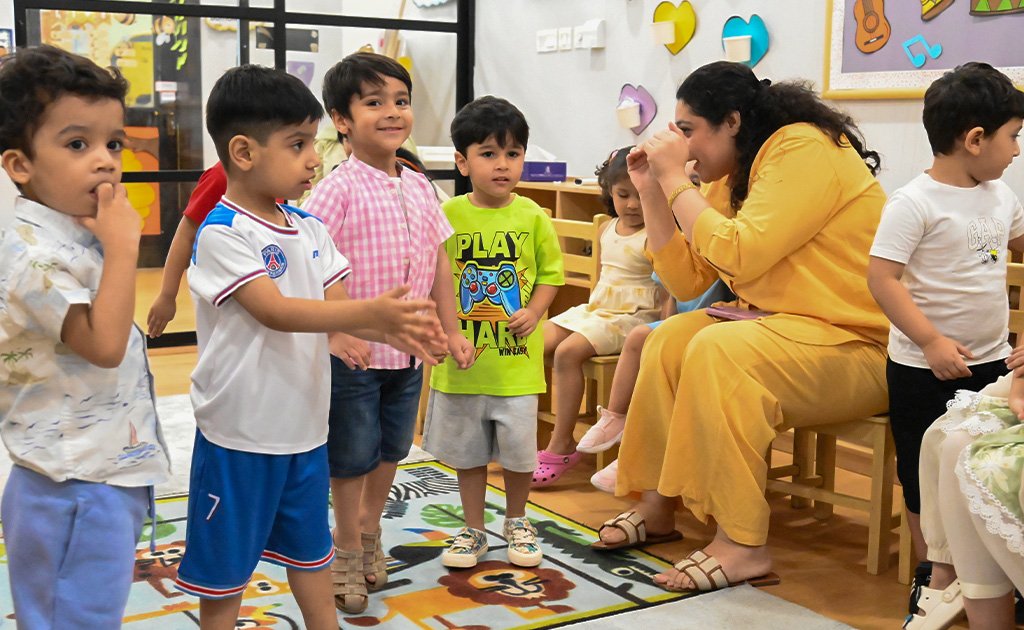
At Chughtai International School, we understand play as the natural and most powerful way young children learn. Through play, children make sense of their world, explore ideas, test possibilities, and build meaningful connections. What may look spontaneous is, in fact, rich with thinking. Our educators play a vital role in ensuring that this play remains purposeful, engaging and deeply supportive of each child’s growth.Rather than directing learning, our teachers observe closely, listen attentively and respond thoughtfully. Their role is to protect children’s curiosity, honor their ideas and gently extend thinking in ways that keep agency and confidence at the center of learning
Observing and Listening with Care
Our early years educators spend time carefully watching how children interact with materials, spaces and one another. These moments reveal what children are curious about ,what excites them and how they are making sense of their experiences. By listening to children’s conversations, noticing their gestures and observing how they solve problems, teachers gain deep insight into each child’s thinking. These observations guide planning and ensure learning grows naturally from children’s interests
Balancing Child-Initiated and Teacher-Supported Learning
Children at Chughtai International are encouraged to initiate their own learning through choice and exploration.Educators support this by thoughtfully offering new materials, adjusting the environment, asking open-ended questions or modelling thinking when appropriate. This balance ensures children feel ownership over their learning while benefiting from gentle guidance that deepens understanding, skills and concepts
The Environment as a Partner in Learning
Our learning spaces areintentionally designed to support independence, collaboration, and exploration. Children are free to move, access materials and work together naturally. Open-ended resources, shared areas and flexible layouts invite children to revisit ideas, extend discoveries and solve problems creatively. At Chughtai International, the environment acts as a “third teacher,” quietly encouraging curiosity and confidence.
Making Learning Visible through Documentation
Educators document children’slearning through photographs,recorded conversations and samples of work. This documentation helps children reflect on their own thinking and achievements, while allowing teachers to plan meaningful nextsteps. For families, it offers a windowinto the richness of everyday learning, strengthening the connection between home and school.
Encouraging Collaboration and Inquiry
Play becomes deeper and more meaningful when children learn together. Educators
support collaboration by helping children listen, share, negotiate ideas and build on
one another’s thinking. Through thoughtful questions such as “What do you think might
happen next?” or “How could we solve this together?” teachers extend inquiry without
taking over, preserving children’s sense of ownership.
Responding with Intention
Every educator action is purposeful and responsive. When teachers introduce new
materials, reorganize a space, or demonstrate a technique, it is always based on what
children are exploring. For example, children curious about water may find pipes or
transparent tubes added to their play. Those experimenting with building may discover new
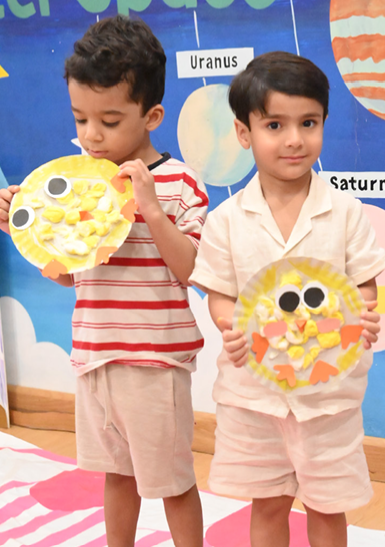
tools or connectors. This intentional support helps children think more deeply, experiment creatively and develop confidence in their
ideas.